Choosing a CNFans Spreadsheet site, with this one on the bench
A Spreadsheet site is a product guide: a catalogue of finds arranged by aisle, each one pointing at a live listing on a Chinese marketplace. There are many of them, and they range from carefully kept to abandoned. How to judge any Spreadsheet site quickly is set out below, followed by the same tests applied to this one.
Home / Picking a Spreadsheet site
Five tests any Spreadsheet site should pass
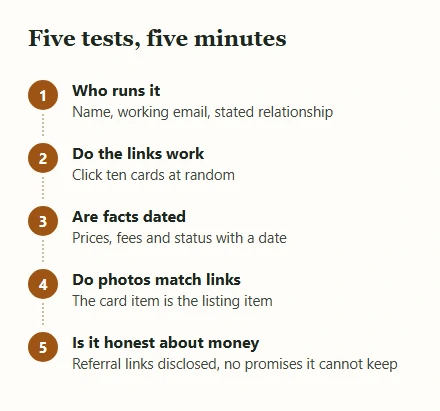
- It says who runs it. A name, an email address that works and a plain statement of whether it is official, independent or paid. Anonymous sites with no contact route have nothing to lose by being wrong.
- Its links work. Click ten cards at random. Dead links and cards that open the wrong item are the clearest sign that nobody maintains the site.
- Its facts carry dates. Prices, fees, holding periods and site status all change. A page that states them without a date is guessing or copying.
- Its photos match its links. The item on the card should be the item on the listing. Sites that reuse one striking photo across many links are selling clicks, not finds.
- It is honest about money. Referral links are standard practice; concealing them is not. Neither is promising prices, quality or delivery times the site does not control.
Running the five tests on this site
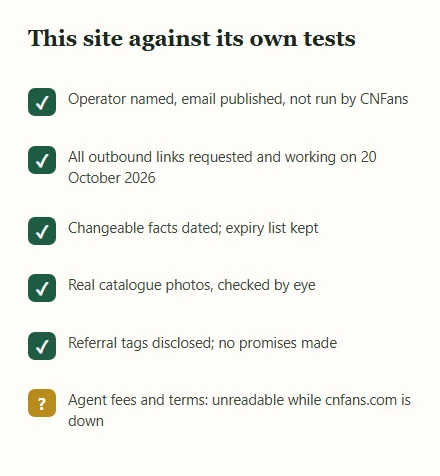
This guide is independent of CNFans. The about page explains its method, and the revision log dates changes. Category links identify the intended catalogue destinations; availability and seller content can change, so open the destination before relying on a card.
Dates: every changeable fact carries the date we read it, and the revision history lists what expires first. Photos: every aisle and wall photo is a real catalogue picture from the aisle it sits on, opened and checked by eye before use; the five plates on the listing page come from the listings they describe. Money: catalogue links carry our referral tag so we can tell which pages help, the CNFans link carries one too, and we quote no fee, delivery time or quality promise on anyone's behalf.
Where this site falls short is in the gaps it cannot fill while cnfans.com is down: the agent's fees, holding period and refund rules. We say so wherever it matters rather than filling the gap.
How this catalogue is kept current
What we refresh
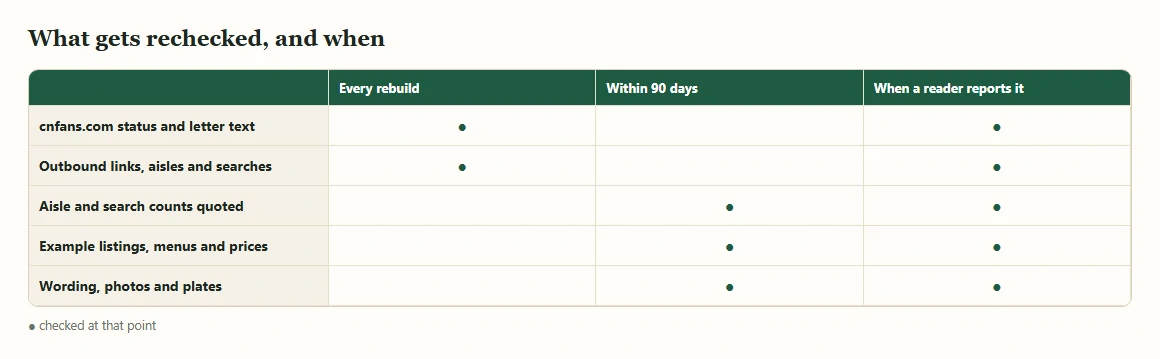
Each rebuild starts with the same checks: request cnfans.com and compare the visible text with the last letter we saw, rerun the outbound link check, reread the aisle counts and search counts quoted on the pages, and reopen the listings used as examples to see whether their menus or prices have changed. Anything that has moved is rewritten and redated, and the change goes into the revision history.
What we do not control
The cards themselves belong to the catalogue we link to, which adds, refreshes and removes them on its own schedule. A card may vanish between our checks, or a listing may be edited after the card was made. That is why our examples quote item numbers and dates, and why every page tells you to trust the live listing over anything printed here, this site included.
How often
Use the date beside a status check or product example. Catalogue destinations and seller options can change between reviews; a working link does not confirm stock or an accepted order. Keep the live listing record you use when paying.
Why use this CNFans Spreadsheet over another
Our difference is deliberately narrow. We do not pick favourite items or rank finds; we teach a way of reading any card. Each aisle comes with the marks worth checking, the field card builder turns those into a checklist, the plates show the method on real listings with their real option menus, and the search counts tell you which words narrow an aisle and which return a flood. All of it is dated.
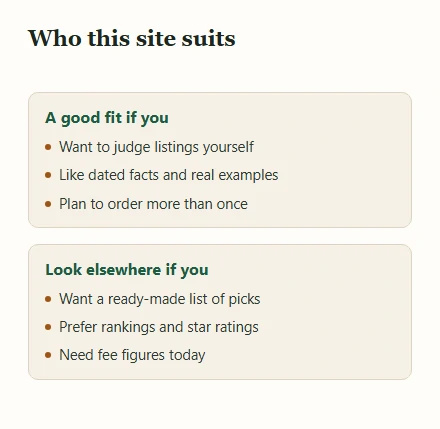
That approach suits buyers who want to choose for themselves and keep making good choices without us. It suits less well anyone who wants a short list of popular items chosen by someone else; plenty of sites do that, and if that is what you need, apply the five tests above and pick one that passes them.
Either way, the catalogue is the same: a card is a lead, the listing is the evidence, and the warehouse photo is the verdict.